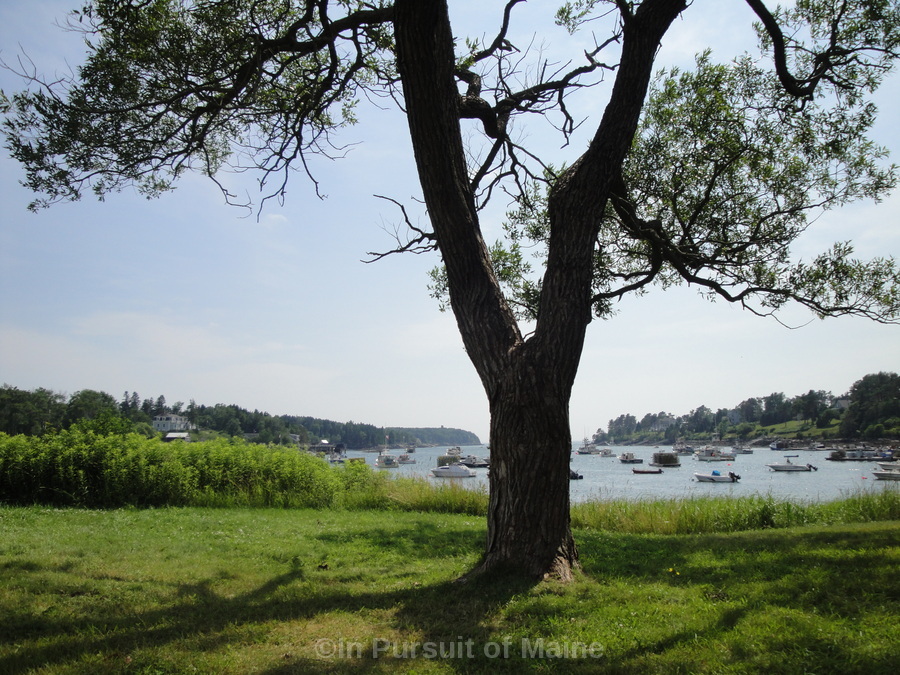
Thursday, July 9, 2015

July 9, 2015 - Dog Days


We are, once again, in the midst of the Dog Days of summer.  This is a 40-day period that begins 20 days before the conjunction of Sirius and the sun and extends to 20 days beyond that conjunction (in modern times, usually July 3 to August 11).  Sirius, also known as the “Dog Star,” is the brightest star in the constellation Canis Major, the stellar dog of Orion.  Right now, it is the brightest star in the night sky of the northern hemisphere.

The Dog Days are always associated with the hottest days of summer and also with a bit of madness.  This is certainly true in my case as I am a cold lover, and this summer heat is wilting me.  Apparently, the ancients felt the same way and blamed the Dog Days for mad dogs, fevers, hysterics, and even wine turning sour.  This last part would not surprise me at all because these are, coincidentally, the days of the first furious attacks of the fruit flies.  When I was a girl, my grandmother would say, “I need to catch a vinegar fly,” when she wanted to make some vinegar.  That’s just another name for a fruit fly, which often carries acetic acid bacteria on its feet, transforming your lovely beverage into vinegar if you’re not careful.

Even the rivers want to dry up during the Dog Days.

Or maybe that’s what you want, as my grandmother did.  Homemade wine vinegar is divine on salads, and once you have it, you will turn your nose up to the stuff they sell in the supermarket.  Vinegar was also a very important thing to the ancients as it effectively kills mycobacteria, even the drug-resistant and disinfectant-resistant strains.  It also helps to preserve food.  In an age without antibiotics or food preservatives, vinegar was worth its weight in gold.

The Old Farmer’s Almanac, started by Robert B. Thomas in 1792, will always predict the least amount of rain during the Dog Days, and those predictions usually become true because this is the time for sweltering heat and not rain.  Even today, the almanac uses Robert’s “secret forecasting formula” to predict the weather, although you might not need it in these wretchedly hot Dog Days.  It’s safe to say that it’s hot outside, and it’s going to stay that way for a while. 

In any event, this is the time for languishing in the shade.  All those things we said we’d do when the warmer weather came, we forget about or we can’t do just now or we’ll surely do tomorrow or next week.  It’s a 40-day period when the world stands on its head, teetering on the edge of insanity, threatening to roll over and play dead.  And people wonder why I love the winter so much.

Wednesday, July 8, 2015

July 8, 2015 - Musings in the Fog


The question I’ve always asked when the fog is thick, as it often is in the morning, is what’s on the other side of it?  We know what’s on the other side of the cove when it’s sunny because we can see it.  While “seeing is believing” is the biggest lie I’ve ever heard, we still seem to take the word of our eyes when the sun is shining.  Unquestioningly, we’ll look across that cove and point everything out on the other side as if it were the back of our hands.

Then suddenly the other side is gone--at least that’s what our eyes tell us.  They say to us, “There is no other side.  In fact, there’s no cove either because we can’t see either one of them.  Therefore, they do not exist because seeing is believing.”  So if seeing something makes it there, i.e., makes it real, then not seeing it makes it not there, makes it unreal.  Now you see how deceitful and limited the eyes can be.

A pier that leads to absolutely nowhere.

Because you know something’s there.  It just has to be there because there’s no such thing as nothing.  In all probability there is still a cove there, and it follows that there is most likely an opposite side, too.  There’s probably a rocky shore over there, just like on this side.  There’s probably lots of vegetation and trees and homes stuck here and there all about the shore, just like on this side.  At least that’s the way I remember it, and my memory wouldn’t lie to me about what my eyes saw at one time, would it?  I can pull that image out of my mind in a heartbeat anytime I want because my eyes placed it there in a very convenient spot.

The odd thing is that when it’s sunny, I don’t instantly pull up images of the fog.  I’d have to work at it a bit to do so.  I don’t say to myself, “Hey wait a minute.  Where is the nothing that was here just yesterday?”  The eyes don’t like to store in the mind what they are afraid of, what they can’t seem to grasp.  The eyes like concrete things.  It’s not as easy to look out on a sunny day and with my “mind’s eye” see the fog instead and not the other shore.

But it can be done.  So what’s on the other side today?  Absolutely nothing.  I’m going to free my mind of the image placed there by my deceitful eyes from a day gone by.  Maybe the world just stops right there and doesn’t go on.  It wouldn’t be such a bad thing, really.

Tuesday, July 7, 2015

July 7, 2015 - Land Creature

LAND CREATURE


Standing at the shore
arms raised to the heavens
the land creature
praises the sky
praises the sun
praises the Earth.

With hungry eyes upon the sea
she swears she does not know
or see or hear
or desire
the touch of the ocean
but she lies.


The land creature.

Monday, July 6, 2015

July 6, 2015 - The Rogue Wave


Old Jack once told me about Abigail Dyer, who had lived along the ocean shore in a small fishing community the entire 15 years of her life.  This was back in the days when people generally stayed put and were born and died in the same place.  This was also back when villages were isolated and self-sufficient, and it wasn’t necessary to waste eight hours a day in school learning how to forget.

Elders were very important back then, as they are now, although people just don’t realize it nowadays.  Their knowledge of the environment kept the younger generations safe and thriving, and in turn, the younger generations would do the same when they themselves became elders.  It was no different in Abigail’s village, and if there was one thing the elders always warned about, it was having a healthy respect for the sea.  Her own grandmother would tell her every day on her way out to collect mussels or other goodies from the sea, “Beware the rogue wave, and never go to the ocean alone!”

"Beware the rogue wave!"

Abigail and her friends had all heard about the rogue wave until they were sick to death of it, and yet none of them had ever seen it.  “Beware the rogue wave!” they would hear from their grandmothers, and stories would then be told of people along the shore, peacefully fishing and gathering.  And suddenly out of nowhere, a huge wave would rise up and snatch them within a second, dragging them far out to sea within moments.  Those taken by the rogue wave were never seen again.  When Abigail was younger, these stories used to scare her, but now that she was a bit older, she began to wonder if they were just a way to keep the children focused on their chores and not swimming.  After all, there were plenty of times after chores when they were allowed to swim near the shore, and no one had ever been taken by a rogue wave in her memory.

And so it was one day that Abigail was heading out to the house of her friend, Sarah, to get her so they could gather mussels together, but as she approached the house, she heard some voices from out behind the shed.  Thinking that she would surprise Sarah and her brother, she crept up to listen in to the conversation.  What she heard, however, broke her heart.  It was Sarah’s voice, but she was carrying on very romantically with Nathaniel, the boy Abigail had her heart set on.  And Sarah knew that, and that’s what hurt so much.

Abigail left without ever letting them know she had been there, but her heart was truly broken--one cut for Sarah and the another cut for Nathaniel.  She headed out to the ocean to gather her mussels, as this was a good part of her family’s diet.  She knew she wasn’t supposed to go alone, but the thought of going with Sarah was simply unbearable.  Besides, she’d been collecting mussels for years, and never once did anything bad ever happen.  Today would be no different, she told herself, although she might cry a lot this time.

Abigail was a good and industrious girl, and she set to work right away gathering the mussels.  Now and then she found a good clam, too, and took that as well.  But her heart was not into the work.  It was into Sarah and Nathaniel.  It was into her broken dreams of marrying him.  It was into a hard lesson about trust and friendship and loyalty.  Her heart focused on anything but work, and at last she decided she just needed a break.

Now, her face was covered with sweat and tears from work and sorrow, and she began to long for a quick swim in the ocean.  She just wanted the water to wash away some of her sadness, some of her tears, and some of her sweat and dirt from work.  She knew she was not supposed to go into the ocean alone, but what could it hurt to just wander a bit on some of the rocky crags and let the ocean cool her feet?  She decided she would do just that and let the cool ocean wash away the fiery storm in her heart.

The rocks were slippery, as they always were, because of the algae and seaweed that covered everything.  She was used to this, though, and her feet were sure.  Very soon she found herself far out on a rocky expanse near the edge of the churning ocean.  The air was crisp and fresh, the wind was swift and cooling, and the sea spray was divinely cleansing.  She closed her eyes and felt relief for the first time that day.

She opened her eyes quickly, though, when she thought she heard a voice calling her name.  “Abigail . . .” it said in a smooth and deep tone, but when she looked around, she saw nothing and thought it must be a figment of her imagination borne of grief and exhaustion.

“Abigail . . .”  But no.  There it was again.  Someone was calling her name in a deep and luscious baritone voice.  Still, she saw no one.  She thought perhaps she should leave, but the delicious feeling of the salt water spray and the wind was so enticing that she couldn’t seem to move her feet.

“Abigail . . .” it said with such rich and deep splendor.
“Who’s there?” she asked.
“I’ve been watching you, Abigail.”
“Who are you?  Where are you?” she asked, looking around again but seeing nothing.
“Abigail . . . so beautiful,” it said, “so peaceful in the ocean.”
“Yes, it is peaceful,” she said, “and it’s the first peace I’ve had all day.”
“I know, Abigail.  I’ve been watching you.”

Somewhere in the back of her mind, Abigail knew that this should frighten her, but somehow it didn’t, not in the least.

“Then you know what happened today,” she said, “with Sarah and--“
“Stories . . .” the voice whispered as it cut her off.
“But my heart is broken.”
“Such sweetness in the heart that loves the ocean so much,” the voice said.
“It’s true, I do love the ocean.”
“Yes, Abigail . . . caresses from the ocean . . .”

She didn’t know how or why it should be so, but somehow that beautiful, rich, low voice was so soothing and so wonderful.  After a short while, Abigail began to feel much better and to forget all about Sarah and Nathaniel.  The crashing waves along the rocks seemed to wash all of the sorrow out of her heart, all of the sadness out of her mind.  There was just the ocean and the rhythm of the waves and the wind and the voice.

“Abigail . . . so sweet,” it said, and she blushed.
“I’m not so sweet,” she felt obligated to say for modesty’s sake.
“So beautiful . . .”
“I don’t even know you,” she mumbled but couldn’t care less about it.
“Ocean kisses . . . washing and churning . . . and sailing away . . .” the voice said.

The wind picked up dramatically and the sound of the waves was hypnotizing.

“Yes, I’d like to sail away,” she said, “For once, I’d just like to be completely free!”
“Abigail . . . embrace . . .”

Abigail closed her eyes and opened her arms as wide as she could.  Within an instant, a magnificent rogue wave rose high into the air and swept her into his arms in a passionate embrace.  She spun in circles, her hair flying wildly about, completely engulfed in the pull of her dark and unseen lover.  Then he swept her out to the cool and cleansing ocean, the waves of renewal and transformation, and there they swim together for eternity.
_____________________


When Old Jack finished the story, I was silent for a while.  The power, the fury, the utter destruction of the rogue wave is well known, but the love of the rogue wave is a secret.

“Do you think the rogue wave was evil?” I asked.
“What do you mean?”
“Well, I mean, do you think it was cruel and horrible and a killer?”
“What a strange thing to ask,” he said.

Sunday, July 5, 2015

July 5, 2015 - A Phantom Ship


Sometimes when I get my camera home and take a look at the photos I’ve taken, I find something I didn’t know was there when I snapped the picture.  I've captured odd faces in trees, strange mushrooms growing in patterns, and will-o'-the-wisps, to name but a few.  Today, wanting only to get a photo of the sailboat’s mast that reached up to the heavens, I did not notice what was behind it.  I did not see it on my camera.  I did not see it with my eyes from the shore.  I’m not sure if it was even there, but it’s now in my photo.

A phantom ship in the background that I did not see when taking this photo.

There’s a phantom schooner, behind the sailboat with the doused mainsail, which is heading around the end of the island.  What’s more, it doesn’t appear to be quite in the water, but rather hovering just a bit above it.  Now, I have lived on the ocean long enough to know that sometimes the ocean distorts things that are far out.  Sometimes the sun creates a strange shimmering in the air above the water (and, in fact, I noticed a lot of shimmering in this area today).  Sometimes at low tide some islands can almost appear to be floating due to reflection and refraction of light.

Then again, sometimes some things happen that I just can’t explain.  Large strange lights at night that travel lightning quick in a horizontal line, disappearing and reappearing islands, voices carried huge distances over the water--yes, I’ve seen and heard many strange things.  I will have to add the phantom schooner, in broad daylight on a sunny day, to the long list of unexplainables.

Sail on, Captain, to that exotic shore.

Saturday, July 4, 2015

July 4, 2015 - On Freedom


Today is a good day to think about freedom.  The dictionary says that freedom is the power or right to act, speak, or think as one wants without hindrance or restraint.  It says that freedom is the absence of subjection to foreign domination or despotic government.  It says that freedom is the state of not being imprisoned or enslaved.  That’s a tremendous definition for just one word.

How many of us have all of these things, i.e., total freedom?  I would bet not many.  Perhaps no one at all has full freedom.  Actually, it sounds almost impossible.  In America, we have the right to act, speak, and think as we want without hindrance or restraint because of the First Amendment.  But how many of us really do act, speak, and think exactly as we want?  Some of us may not because we do not wish to hurt someone else’s feelings.  Others may not because they are worried what people might think of them.  Still others may not because today’s politically correct world tells them they cannot, and they mistakenly believe it.

The freedom of the waves in Mackerel Cove.

What about the absence of subjection to foreign domination or despotic government?  Do we have that?  Perhaps we are not dominated by a foreign country, but surely their policies can affect and even sometimes dominate us.  As for a despotic government, that is a very subjective term.  Some will feel our government is very despotic; others that it is quite fair.  Perception is everything.  It’s not what something actually is, it’s what you think it is that changes everything.

Then there’s the state of not being imprisoned or enslaved.  This one is tricky.  It is also sublime, because if you can manage this one, you have true freedom.  In 1642 Richard Lovelace, in his poem To Althea, From Prison, said “Stone walls do not a prison make, nor iron bars a cage.”  He knew that it took a lot more than that to make a prisoner, to enslave someone.  He knew that true freedom cannot ever be caged or enslaved because it is not a physical thing.

Following his lead, then, from the poem, I will say that when you can toast the health of your friends in an atmosphere of camaraderie, you have freedom.  When you give them loyalty and receive it undiluted in return, you have freedom.  When you can sing at the top of your lungs of the greatness of your society or your faith, you have freedom.  Of the stone walls and iron bars, he says, “Minds innocent and quiet take that for a hermitage.”  Perception, again.  What is prison to one person is a peaceful hermitage, a retreat, to someone else.

In the end, though, he says, “If I have freedom in my love and in my soul am free, angels alone, that soar above, enjoy such liberty.”  It is the freedom to love and be loved, to feel free in your soul, that lifts you from the vagaries of this world to the realm of the divine.

Today is Independence Day in the United States, “land of the free and home of the brave.”  There are many broken things around us that desperately need fixing, but the fact that we still can fix them speaks of freedom to me.  We can still toast the health of our friends and speak our minds, however uncomfortable that might make some people.  We have not reached the realm of the divine yet, because we are a work in progress.  I’m happy to be part of that work.

Friday, July 3, 2015

July 3, 2015 - Enlightenment


The Buddha said enlightenment is “the end of suffering.”  Sounds simple enough.  Just stop suffering and you will reach enlightenment.  Then a whole slew of things are thrown at us, not only by Buddhists but by all religions, telling us of the multitude of exacting things we must do to end our suffering.  Most of them involve a lot of suffering along the way.

Suffering appears to be that condition of being human.  It’s the nagging thoughts, the fierce and crippling emotions, the wants and needs, the jealousies and anger, the fear of the future, the regret of the past, and the loss of our freedom.  All those things that go into making us complex beings seem to cause so much suffering.  It’s hard to be enlightened when you’re worried about what flag your neighbor is flying.

Enlightenment is just around the bend.

Into the woods, then.  It was so hot today anyhow that going into the woods seemed to be the perfect cure.  The ocean might be refreshing with the crashing cool waves, but the sun is too fierce.  I’ll save the ocean for nighttime and the woods for the day.  That’s where I went again, as always.  This picture shows the nice wide path I took.  Not all of the paths in the woods are this easy, but I was too tired for anything else.  Can you tell by looking at the photo if the path indicates where I was going or where I had been?  Luckily, I couldn’t tell either, even when I was walking it.

A deer ran out in front of me.  I tried to get a photo, but she ran like lightning.  She was so close I could almost touch her.  I guess she knew I didn’t pose too much of a threat at this time of year.  She got me thinking again, though, about enlightenment.  I think I’ve mentioned this before, but it bears repeating often.  What if we humans are not the most complex and evolved creatures on the planet but instead one of the least?  Perhaps the animals are patiently waiting for us to play catch up.  In the meantime, we continue to destroy things, enslave ourselves, and suffer greatly.

The animals don’t suffer.  Oh, they have their physical aches and pains and difficulties.  They have much shorter life spans, too.  But they don’t suffer.  That’s something uniquely human.  Enlightenment, the Buddha says, is the end of suffering.  The woods are filled with enlightened beings waiting for us to finally “get it.”  The trick is hidden there in plain sight.

Thursday, July 2, 2015

July 2, 2015 - A Little Trap


There I was, hunting in the woods for more mushrooms, as usual.  I harvested some incredibly fresh Reishi mushrooms and was heading out when I saw this.  Hmmmm . . . looks a bit tempting, doesn’t it?  A little nondescript mushroom growing right there at the base of the tree.  Of the hollowed out tree.  With the door in the back.  And the large gray fingers reaching into the Earth.  Right.

They must have thought I’d be too tired to catch this, and I almost was because it was three miles uphill to get those Reishis.  But I’ve been wandering these woods too long to not know a faerie trap when I see one.  Nice try, though.  “A” for effort.

A little faerie trap.

Wednesday, July 1, 2015

July 1, 2015 - Pioneers


I must be a reincarnated pioneer.  Every time I see a lonely patch of acreage or one of Maine’s many small uninhabited islands, I get such an urge to just strike out, explore, and start a new life.  It must be the wanderlust in me; it never dies.  I find myself calculating exactly how much it would take to seriously become a modern pioneer.

Invariably, I find myself eventually conceding to the idea of bringing others along.  Starting a whole new civilization can’t be done by one person.  When I was younger, I never would have admitted to that.  “I can do it all on my own,” I’d say, bursting with false pride.  But now that I’m older, I know that at best it’s foolhardy to say such a thing and at worst it’s life-threatening.  People really do need people.  We need someone to hunt when we’re sick.  We need someone to plant when we’re hunting.  We need someone to tend a fire when we’re ice fishing.  We really need each other.

Land of the free.

Many people live alone these days.  They wake up alone.  They travel to work alone.  They work alone in an isolated cubicle.  They travel back to their house alone.  They eat their dinner alone.  They go to sleep alone.  I lived in a city once a long time ago.  It can be a very lonely existence, even with millions of people around you.  It’s easy to start thinking you don’t need anyone since you’ve been doing it all alone for so long.  But that’s not really true.  There are a lot of people involved in our aloneness.  There are bankers who handle our money (or perhaps mishandle it), train and bus drives who bring us to and fro, maintenance people who care for the buildings we work in, and people who prepare our food, no matter how raw the ingredients, etc.  No, we cannot make it without other people.

But back to being a pioneer.  By definition, a pioneer is someone who is first or among the first to explore and settle a new territory.  We might not have too much luck finding new territories to explore everywhere, although Maine still has a lot of “unorganized territory” (areas without local municipal governments) that makes up just over half of the state, believe it or not.  So while we might not be able to strike out in the same manner in which our forbears did in centuries gone by, we can still strike out and “settle” an area.  This is why you’ll certainly need other people.

Imagine “settling” a new place, maybe even turning it into a little town.  You’d still be in the U.S., of course, subject to U.S. law and U.S. taxes.  But beyond that, just imagine . . .  Your group could start out small and grow slowly, adding the people and the ideas you want to it over time.  Everyone would work hard, but you would be working for one another.  I’m not talking about living as a caveman because there is nothing wrong with modern conveniences.  However, as time went by, you would figure out ways to need less and less from “civilization.”  You would find ways to grow what you need, forage for it, hunt, fish, and build homes.  Slowly, you could become more and more independent.

It’s not as farfetched as it might at first sound.  There are established groups all around the world who have done this very thing, from the Amish to the Bruderhof and everything in between.  It can be done.  It takes commitment.  It takes team effort and trust.  It takes time and patience and lots of hope.  Above all, it takes a pioneering spirit.

I’m a pioneer, always exploring new territory whenever I can, finding the secrets of Maine.  When I look out at a small uninhabited island, when I look at abandoned wooded acreage, the itch to strike out seizes me.  Perhaps I am a hopeless romantic, but it’s in my blood.  I think there are a lot of covert pioneers out there just waiting for the signal . . .